English
 Arabic
 Français
 Spanish
 Portuguese
 Deutsch
 Turkish
 Dutch
Dutch
 Italiano
 Russian
 Romaian
 Portuguese (Brazil)
 Greek
Greek
 Réunionnais
 India
India
 Babarun (BBRN)
 Collab Influenceurs
 Coupon
 Procaly
 Récompenses
 Événementiels
 Parrainage
 Calculez vos calories
 Affiliation Matrice 3x9
 La silver économie
 Maps Membres
 BabaShopCenter
 Bot IA de Trading
 Runsound music
 Films partner IMDb
 Affiliation
 Prêts Immobiliers

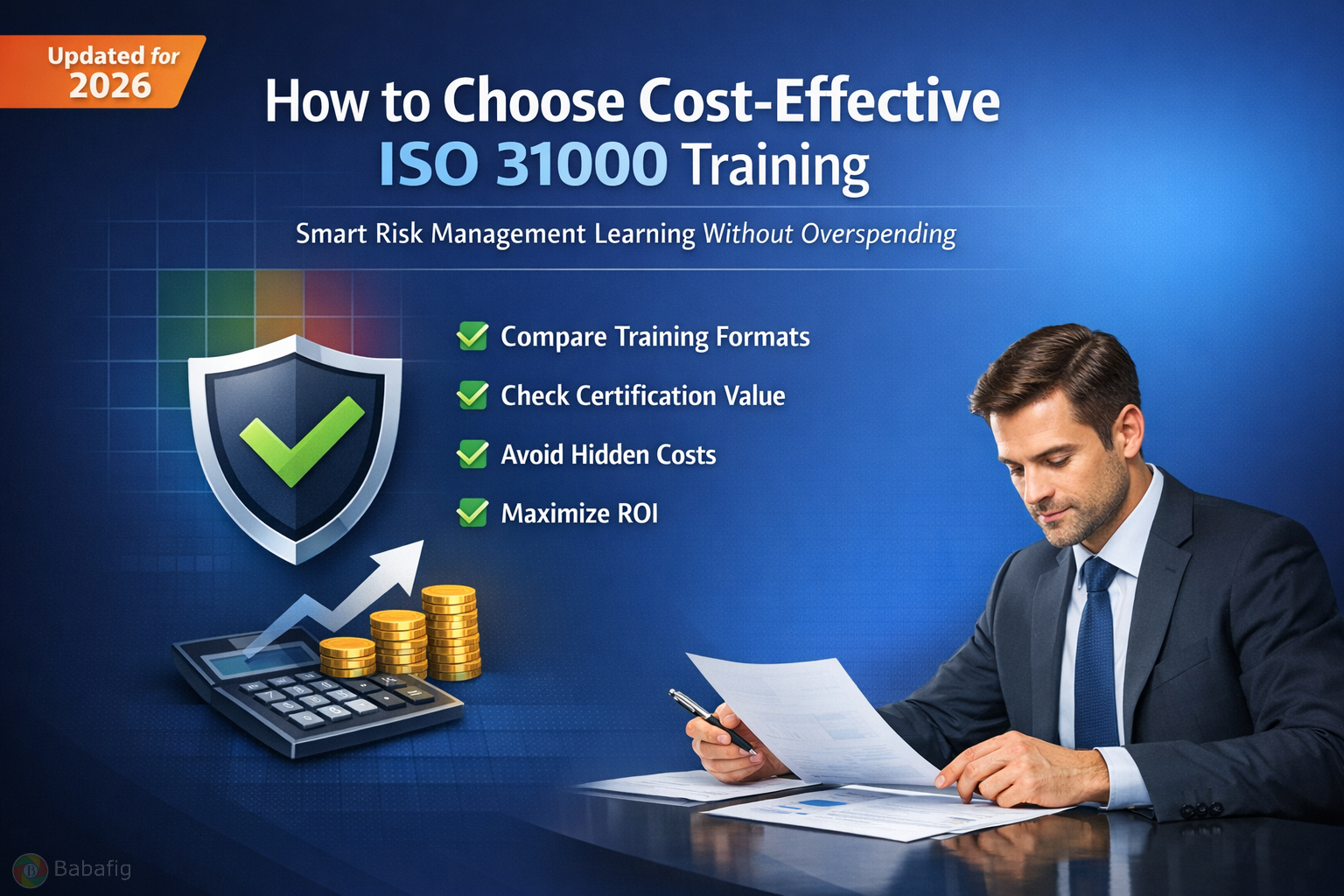
How to Choose Cost-Effective ISO 31000 Training
When you decide to invest in ISO 31000 training, the first question that usually comes to mind is: How do I get real value without overspending? With so many providers offering ISO 31000 courses, certifications, online bootcamps, and corporate programs, it’s easy to feel overwhelmed.
Choosing cost-effective ISO 31000 Pricing is not about finding the cheapest option. It’s about selecting a program that delivers strong risk management knowledge, practical skills, and recognized credentials — all at a price that matches your career or organizational goals.
Let’s break down how you can make a smart, budget-friendly decision.
1. Understand Your Objective First
Before comparing prices, clarify your goal:
Are you looking to build foundational knowledge in ISO 31000 risk management?
Do you want to become an ISO 31000 Risk Manager?
Are you implementing ISO 31000 in your organization?
Do you need certification for career growth?
If you are just starting your risk management journey, a foundation-level ISO 31000 course may be sufficient and more affordable. However, if you’re targeting leadership roles or consulting positions, a Lead Risk Manager certification may offer better long-term value.
Choosing the right level prevents you from overpaying for training that exceeds your current needs.
2. Compare Course Formats: Online vs Classroom
One of the biggest pricing factors in ISO 31000 training is delivery mode.
Online Training
More affordable
Flexible schedule
Saves travel and accommodation costs
Ideal for working professionals
Classroom Training
Higher fees
Travel expenses
Fixed schedule
Direct interaction with instructors
If budget is a concern, online instructor-led or self-paced ISO 31000 training is often the most cost-effective option. Many reputable providers now offer interactive virtual sessions that match classroom quality at lower prices.
3. Evaluate What’s Included in the Fee
Not all ISO 31000 courses offer the same value. When comparing prices, check what’s included:
Study materials
Practice exams
Exam voucher
Certification fees
Post-training support
Access to recorded sessions
Case studies and real-world examples
Sometimes a slightly higher-priced ISO 31000 course actually saves money because the exam fee and materials are included. Low-cost programs often add hidden charges later.
Always look at the total cost, not just the initial training fee.
4. Check Accreditation and Recognition
Cost-effective training must also be credible. A cheaper course that lacks recognition may not add value to your resume.
Look for:
Globally recognized certification bodies
Trainers with real-world risk management experience
Alignment with the latest ISO 31000 framework
Transparent certification process
An ISO 31000 certification from a recognized provider enhances your professional credibility and improves career opportunities in risk management, compliance, governance, and enterprise risk management (ERM).
5. Assess Trainer Experience
A well-experienced trainer can save you months of self-study. The best ISO 31000 course programs:
Provide real case studies
Offer implementation insights
Explain risk identification and assessment clearly
Share audit preparation strategies
Paying slightly more for expert-led training often results in better understanding, fewer exam retakes, and faster career impact — making it cost-effective in the long run.
6. Look for Corporate or Group Discounts
If you’re enrolling as a team, many providers offer:
Bulk enrollment discounts
Corporate packages
Customized risk management workshops
For organizations implementing ISO 31000 risk management, group training significantly reduces per-person cost and ensures consistency in understanding across departments.
7. Check Reviews and Success Rates
Before enrolling in any ISO 31000 course:
Read participant reviews
Check LinkedIn testimonials
Ask about exam success rates
Verify post-training support
A low-cost training program with poor reviews may end up costing more if you need to retake exams or redo the course.
8. Consider Long-Term ROI, Not Just Cost
Effective ISO 31000 training helps professionals:
Improve decision-making skills
Identify and mitigate risks proactively
Reduce operational losses
Strengthen enterprise risk management systems
For organizations, trained professionals can significantly lower financial risks and compliance penalties. In this sense, quality ISO 31000 training is not an expense — it is an investment.
Why ISO 31000 Certification Matters
While training builds knowledge, ISO 31000 certification validates your expertise. It demonstrates that you understand risk management principles, frameworks, and implementation strategies aligned with international standards.
ISO 31000 certification benefits include:
Increased job opportunities in risk and compliance roles
Higher earning potential
Stronger professional credibility
Recognition in global markets
Competitive advantage in consulting and leadership roles
In 2026 and beyond, organizations are prioritizing structured risk management due to economic uncertainty, cybersecurity threats, regulatory pressures, and supply chain disruptions. Certified ISO 31000 professionals are increasingly in demand to guide strategic decisions.
If your goal is long-term career growth in governance, risk, and compliance (GRC), certification adds measurable value.
9. Avoid Common Mistakes
Here are common errors people make when choosing ISO 31000 training:
Selecting the cheapest option without checking credibility
Ignoring exam fees and hidden charges
Choosing advanced training without foundation knowledge
Not verifying trainer experience
Overlooking post-training support
Avoiding these mistakes ensures you choose a program that is both affordable and impactful.
10. Create a Smart Selection Checklist
Before enrolling, ask:
Does this ISO 31000 course match my career level?
Is the certification recognized internationally?
Are exam fees included?
Does the training offer practical implementation knowledge?
Is there ongoing support after completion?
If the answer to these questions is yes, you’re likely choosing a cost-effective ISO 31000 training program.
Final Thoughts
Choosing cost-effective ISO 31000 training is about balancing price, credibility, and value. The right program should strengthen your understanding of ISO 31000 risk management, prepare you for certification, and enhance your career prospects — without unnecessary expenses.
Instead of focusing only on cost, focus on return on investment. The right ISO 31000 course can open doors to leadership roles, consulting opportunities, and global recognition in risk management.
When selected wisely, ISO 31000 training is not just affordable — it becomes a strategic investment in your professional future.
When you decide to invest in ISO 31000 training, the first question that usually comes to mind is: How do I get real value without overspending? With so many providers offering ISO 31000 courses, certifications, online bootcamps, and corporate programs, it’s easy to feel overwhelmed.
Choosing cost-effective ISO 31000 Pricing is not about finding the cheapest option. It’s about selecting a program that delivers strong risk management knowledge, practical skills, and recognized credentials — all at a price that matches your career or organizational goals.
Let’s break down how you can make a smart, budget-friendly decision.
1. Understand Your Objective First
Before comparing prices, clarify your goal:
Are you looking to build foundational knowledge in ISO 31000 risk management?
Do you want to become an ISO 31000 Risk Manager?
Are you implementing ISO 31000 in your organization?
Do you need certification for career growth?
If you are just starting your risk management journey, a foundation-level ISO 31000 course may be sufficient and more affordable. However, if you’re targeting leadership roles or consulting positions, a Lead Risk Manager certification may offer better long-term value.
Choosing the right level prevents you from overpaying for training that exceeds your current needs.
2. Compare Course Formats: Online vs Classroom
One of the biggest pricing factors in ISO 31000 training is delivery mode.
Online Training
More affordable
Flexible schedule
Saves travel and accommodation costs
Ideal for working professionals
Classroom Training
Higher fees
Travel expenses
Fixed schedule
Direct interaction with instructors
If budget is a concern, online instructor-led or self-paced ISO 31000 training is often the most cost-effective option. Many reputable providers now offer interactive virtual sessions that match classroom quality at lower prices.
3. Evaluate What’s Included in the Fee
Not all ISO 31000 courses offer the same value. When comparing prices, check what’s included:
Study materials
Practice exams
Exam voucher
Certification fees
Post-training support
Access to recorded sessions
Case studies and real-world examples
Sometimes a slightly higher-priced ISO 31000 course actually saves money because the exam fee and materials are included. Low-cost programs often add hidden charges later.
Always look at the total cost, not just the initial training fee.
4. Check Accreditation and Recognition
Cost-effective training must also be credible. A cheaper course that lacks recognition may not add value to your resume.
Look for:
Globally recognized certification bodies
Trainers with real-world risk management experience
Alignment with the latest ISO 31000 framework
Transparent certification process
An ISO 31000 certification from a recognized provider enhances your professional credibility and improves career opportunities in risk management, compliance, governance, and enterprise risk management (ERM).
5. Assess Trainer Experience
A well-experienced trainer can save you months of self-study. The best ISO 31000 course programs:
Provide real case studies
Offer implementation insights
Explain risk identification and assessment clearly
Share audit preparation strategies
Paying slightly more for expert-led training often results in better understanding, fewer exam retakes, and faster career impact — making it cost-effective in the long run.
6. Look for Corporate or Group Discounts
If you’re enrolling as a team, many providers offer:
Bulk enrollment discounts
Corporate packages
Customized risk management workshops
For organizations implementing ISO 31000 risk management, group training significantly reduces per-person cost and ensures consistency in understanding across departments.
7. Check Reviews and Success Rates
Before enrolling in any ISO 31000 course:
Read participant reviews
Check LinkedIn testimonials
Ask about exam success rates
Verify post-training support
A low-cost training program with poor reviews may end up costing more if you need to retake exams or redo the course.
8. Consider Long-Term ROI, Not Just Cost
Effective ISO 31000 training helps professionals:
Improve decision-making skills
Identify and mitigate risks proactively
Reduce operational losses
Strengthen enterprise risk management systems
For organizations, trained professionals can significantly lower financial risks and compliance penalties. In this sense, quality ISO 31000 training is not an expense — it is an investment.
Why ISO 31000 Certification Matters
While training builds knowledge, ISO 31000 certification validates your expertise. It demonstrates that you understand risk management principles, frameworks, and implementation strategies aligned with international standards.
ISO 31000 certification benefits include:
Increased job opportunities in risk and compliance roles
Higher earning potential
Stronger professional credibility
Recognition in global markets
Competitive advantage in consulting and leadership roles
In 2026 and beyond, organizations are prioritizing structured risk management due to economic uncertainty, cybersecurity threats, regulatory pressures, and supply chain disruptions. Certified ISO 31000 professionals are increasingly in demand to guide strategic decisions.
If your goal is long-term career growth in governance, risk, and compliance (GRC), certification adds measurable value.
9. Avoid Common Mistakes
Here are common errors people make when choosing ISO 31000 training:
Selecting the cheapest option without checking credibility
Ignoring exam fees and hidden charges
Choosing advanced training without foundation knowledge
Not verifying trainer experience
Overlooking post-training support
Avoiding these mistakes ensures you choose a program that is both affordable and impactful.
10. Create a Smart Selection Checklist
Before enrolling, ask:
Does this ISO 31000 course match my career level?
Is the certification recognized internationally?
Are exam fees included?
Does the training offer practical implementation knowledge?
Is there ongoing support after completion?
If the answer to these questions is yes, you’re likely choosing a cost-effective ISO 31000 training program.
Final Thoughts
Choosing cost-effective ISO 31000 training is about balancing price, credibility, and value. The right program should strengthen your understanding of ISO 31000 risk management, prepare you for certification, and enhance your career prospects — without unnecessary expenses.
Instead of focusing only on cost, focus on return on investment. The right ISO 31000 course can open doors to leadership roles, consulting opportunities, and global recognition in risk management.
When selected wisely, ISO 31000 training is not just affordable — it becomes a strategic investment in your professional future.
How to Choose Cost-Effective ISO 31000 Training
When you decide to invest in ISO 31000 training, the first question that usually comes to mind is: How do I get real value without overspending? With so many providers offering ISO 31000 courses, certifications, online bootcamps, and corporate programs, it’s easy to feel overwhelmed.
Choosing cost-effective ISO 31000 Pricing is not about finding the cheapest option. It’s about selecting a program that delivers strong risk management knowledge, practical skills, and recognized credentials — all at a price that matches your career or organizational goals.
Let’s break down how you can make a smart, budget-friendly decision.
1. Understand Your Objective First
Before comparing prices, clarify your goal:
Are you looking to build foundational knowledge in ISO 31000 risk management?
Do you want to become an ISO 31000 Risk Manager?
Are you implementing ISO 31000 in your organization?
Do you need certification for career growth?
If you are just starting your risk management journey, a foundation-level ISO 31000 course may be sufficient and more affordable. However, if you’re targeting leadership roles or consulting positions, a Lead Risk Manager certification may offer better long-term value.
Choosing the right level prevents you from overpaying for training that exceeds your current needs.
2. Compare Course Formats: Online vs Classroom
One of the biggest pricing factors in ISO 31000 training is delivery mode.
Online Training
More affordable
Flexible schedule
Saves travel and accommodation costs
Ideal for working professionals
Classroom Training
Higher fees
Travel expenses
Fixed schedule
Direct interaction with instructors
If budget is a concern, online instructor-led or self-paced ISO 31000 training is often the most cost-effective option. Many reputable providers now offer interactive virtual sessions that match classroom quality at lower prices.
3. Evaluate What’s Included in the Fee
Not all ISO 31000 courses offer the same value. When comparing prices, check what’s included:
Study materials
Practice exams
Exam voucher
Certification fees
Post-training support
Access to recorded sessions
Case studies and real-world examples
Sometimes a slightly higher-priced ISO 31000 course actually saves money because the exam fee and materials are included. Low-cost programs often add hidden charges later.
Always look at the total cost, not just the initial training fee.
4. Check Accreditation and Recognition
Cost-effective training must also be credible. A cheaper course that lacks recognition may not add value to your resume.
Look for:
Globally recognized certification bodies
Trainers with real-world risk management experience
Alignment with the latest ISO 31000 framework
Transparent certification process
An ISO 31000 certification from a recognized provider enhances your professional credibility and improves career opportunities in risk management, compliance, governance, and enterprise risk management (ERM).
5. Assess Trainer Experience
A well-experienced trainer can save you months of self-study. The best ISO 31000 course programs:
Provide real case studies
Offer implementation insights
Explain risk identification and assessment clearly
Share audit preparation strategies
Paying slightly more for expert-led training often results in better understanding, fewer exam retakes, and faster career impact — making it cost-effective in the long run.
6. Look for Corporate or Group Discounts
If you’re enrolling as a team, many providers offer:
Bulk enrollment discounts
Corporate packages
Customized risk management workshops
For organizations implementing ISO 31000 risk management, group training significantly reduces per-person cost and ensures consistency in understanding across departments.
7. Check Reviews and Success Rates
Before enrolling in any ISO 31000 course:
Read participant reviews
Check LinkedIn testimonials
Ask about exam success rates
Verify post-training support
A low-cost training program with poor reviews may end up costing more if you need to retake exams or redo the course.
8. Consider Long-Term ROI, Not Just Cost
Effective ISO 31000 training helps professionals:
Improve decision-making skills
Identify and mitigate risks proactively
Reduce operational losses
Strengthen enterprise risk management systems
For organizations, trained professionals can significantly lower financial risks and compliance penalties. In this sense, quality ISO 31000 training is not an expense — it is an investment.
Why ISO 31000 Certification Matters
While training builds knowledge, ISO 31000 certification validates your expertise. It demonstrates that you understand risk management principles, frameworks, and implementation strategies aligned with international standards.
ISO 31000 certification benefits include:
Increased job opportunities in risk and compliance roles
Higher earning potential
Stronger professional credibility
Recognition in global markets
Competitive advantage in consulting and leadership roles
In 2026 and beyond, organizations are prioritizing structured risk management due to economic uncertainty, cybersecurity threats, regulatory pressures, and supply chain disruptions. Certified ISO 31000 professionals are increasingly in demand to guide strategic decisions.
If your goal is long-term career growth in governance, risk, and compliance (GRC), certification adds measurable value.
9. Avoid Common Mistakes
Here are common errors people make when choosing ISO 31000 training:
❌ Selecting the cheapest option without checking credibility
❌ Ignoring exam fees and hidden charges
❌ Choosing advanced training without foundation knowledge
❌ Not verifying trainer experience
❌ Overlooking post-training support
Avoiding these mistakes ensures you choose a program that is both affordable and impactful.
10. Create a Smart Selection Checklist
Before enrolling, ask:
Does this ISO 31000 course match my career level?
Is the certification recognized internationally?
Are exam fees included?
Does the training offer practical implementation knowledge?
Is there ongoing support after completion?
If the answer to these questions is yes, you’re likely choosing a cost-effective ISO 31000 training program.
Final Thoughts
Choosing cost-effective ISO 31000 training is about balancing price, credibility, and value. The right program should strengthen your understanding of ISO 31000 risk management, prepare you for certification, and enhance your career prospects — without unnecessary expenses.
Instead of focusing only on cost, focus on return on investment. The right ISO 31000 course can open doors to leadership roles, consulting opportunities, and global recognition in risk management.
When selected wisely, ISO 31000 training is not just affordable — it becomes a strategic investment in your professional future.
·15 Vues
·0 Avis